

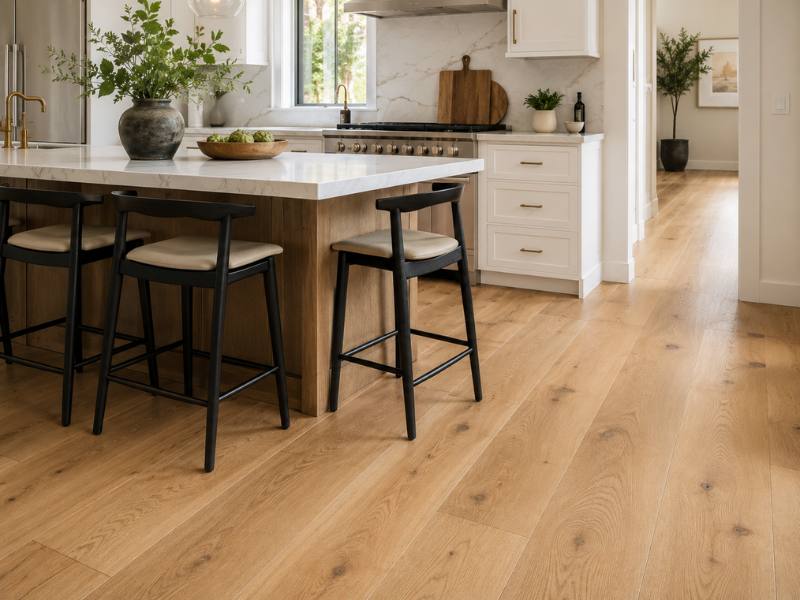
Walk into a newly finished home today and the floor often speaks before anything else does. Wide planks, the kind that stretch seven to ten inches across, have quietly become the look homeowners ask for by name. Where narrow strips once defined a classic hardwood floor, broad boards now carry a calmer, more modern feel. If you have been browsing hardwood flooring lately, you have probably noticed the boards getting wider and the rooms looking more open because of it.
We at Mill Creek Carpet have watched this preference grow over more than 80 years of helping people choose floors they love. From our showrooms across South Tulsa, Edmond, Norman, McAlester, Muskogee, Grove, Stillwater, Ardmore, Oklahoma City, and into Wichita, Kansas, we hear the same request again and again. Customers want fewer seams, more visible grain, and a surface that feels generous underfoot. Wide-plank hardwood delivers all three.
The shift from skinny strips to broad boards
For most of the last century, strip flooring measured around two and a quarter inches wide. It was practical, easy to mill, and it suited the smaller rooms of older homes. Tastes have changed alongside the way we build, and open floor plans now reward a wider board that can carry a big space without looking busy. That evolution shows just how much flooring follows the architecture around it.
What actually counts as wide plank
The industry generally calls anything five inches and up a wide plank, but the real showstoppers land in the seven to ten inch range. At that width, each board reveals more of the wood's natural character, from sweeping grain to knots and color variation. The result feels less like flooring and more like furniture you happen to walk on. Stand a sample upright next to a traditional strip and the difference in presence is immediate.
Why bigger boards make rooms feel larger
Fewer boards mean fewer seams, and fewer seams give the eye a clean, uninterrupted sweep across the floor. That visual continuity tricks a room into feeling more spacious than its square footage suggests. It is the same reason designers favor wide planks in everything from cozy bedrooms to wide-open great rooms. Lighter colors amplify the effect, while wider boards in deep tones add a grounded, settled warmth.
Choosing wide-plank hardwood that lasts
Bigger boards bring a few practical questions worth thinking through before you fall for a sample. Width affects how wood moves with humidity, how it is installed, and which species will hold up best in your home. A short sit-down with a design consultation can save you from surprises later and point you toward a floor suited to your space. Getting these details right early is what separates a floor you tolerate from one you treasure.
Solid or engineered for wider widths
Solid boards are beautiful, yet wide widths expand and contract more with moisture, which can lead to gaps in dry winters. Many homeowners choose engineered hardwood for wide planks because its layered core stays more stable across seasons. Both options can be sanded and refinished, so you are not sacrificing longevity for peace of mind. If your home sees big swings in humidity, that added stability is well worth considering.
Caring for a wide-plank floor
Wide-plank floors ask for the same gentle care any quality wood floor appreciates. Keep humidity steady, wipe spills promptly, and use felt pads under furniture to protect the finish. Treated well, these floors only grow richer and more characterful with the years. A little routine attention keeps that wide, sweeping look fresh for decades.
See wide-plank hardwood in person
The best way to understand a wide plank is to stand on one and watch the light move across the grain. Visit one of our showrooms to feel the difference for yourself, and when you are ready, request a consultation with our flooring experts. We would love to help you find the floor your home has been waiting for.


