

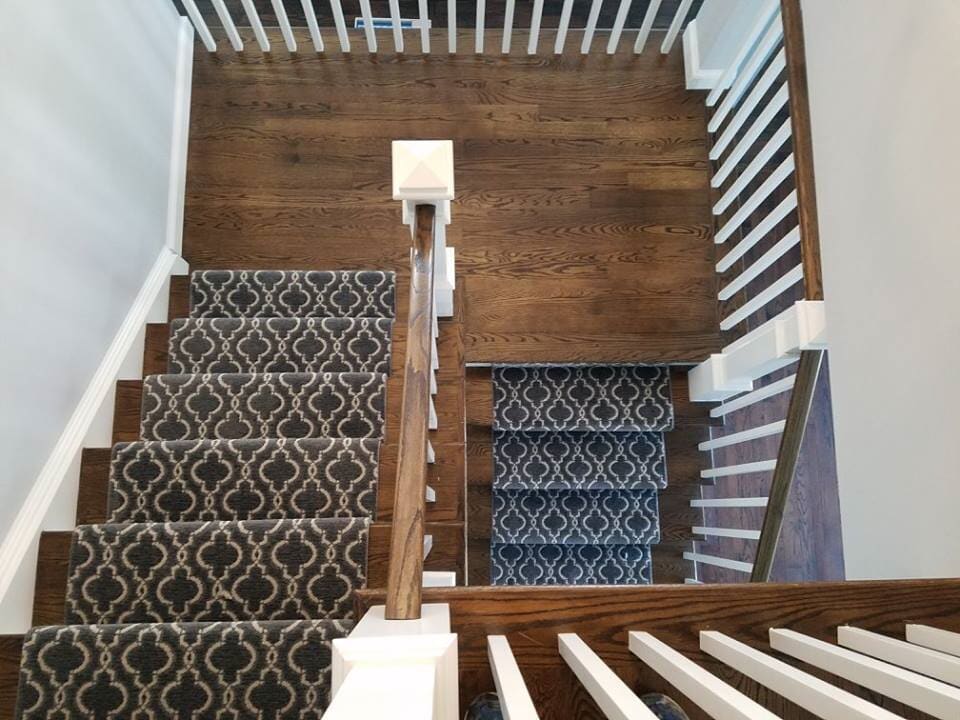
When designing a multi-story home, the staircase serves as a central focal point connecting your living spaces. Finishing these steps involves balancing performance, visual appeal, and comfort underfoot. Many homeowners find themselves weighing two popular options: installing a distinct runner or opting for a fully carpeted staircase. Both styles bring unique advantages, transforming a functional structural element into a beautiful design statement.
We at Mill Creek Carpet have spent generations helping families across South Tulsa, Edmond, Norman, McAlester, Muskogee, Grove, Stillwater, Ardmore, Oklahoma City, and Wichita, Kansas select the perfect foundations for their homes. As a dedicated flooring company, we know the right choice depends heavily on your daily routine and aesthetic goals. Exploring how these installation styles compare can give you the clarity needed to make a confident decision.
A stair runner leaves a portion of the step exposed on either side, creating a framed look that highlights architectural beauty. This approach is highly favored when the staircase is constructed from beautiful hardwood flooring you want to showcase. The contrast between a rich wood finish and a soft textile strip adds immediate depth to your entryway, allowing you to introduce color without hiding original craftsmanship.
Comparing performance, style, and household safety
Safety is often the primary reason homeowners consider adding a textile layer to their steps. Bare wood, tile, or even some types of luxury vinyl flooring can become slippery, increasing the risk of slips. Both full carpeting and runners provide excellent traction, cushioning your footsteps and offering peace of mind. For families with children or active pets, this added security is a vital priority.
While both options improve traction, a full-stair installation covers the entire surface from wall to wall, eliminating exposed hard edges. This complete coverage provides a consistent, cushioned boundary across every square inch of the steps. Conversely, a runner leaves the outer edges uncovered, meaning anyone walking close to the wall steps on bare wood. If maximum impact reduction is your top priority, covering the entire width is generally ideal.
Elevating your interior design style
From a design standpoint, a runner acts like a decorative frame, accentuating the vertical flow of your home. It creates an attractive visual pathway that guides the eye upward, making it excellent for entryways. Homeowners often use runners to introduce bold patterns or intricate textures that might feel overwhelming in a full room. The combination of exposed edges and a tailored center delivers a high-end appearance that feels custom.
Full carpeting offers a completely different aesthetic that prioritizes visual continuity and quiet luxury. Wrapping the entire staircase in a single material creates a seamless transition blending beautifully with adjacent rooms. This style works exceptionally well if your upper or lower floors already feature matching carpet choices. It softens the hard architectural lines of the staircase, resulting in a warmer, more inviting atmosphere.
Managing daily maintenance and wear
Staircases experience intense foot traffic, making durability and ease of cleaning crucial factors. Full-stair installations are highly effective at concealing the natural wear and tear that accumulates on the underlying structure. They hide dust, scratches, and minor dents in the wood, keeping your steps looking fresh with routine vacuuming. Choosing resilient carpet fibers designed to withstand heavy traffic ensures your investment retains its shape over many years.
Runners present a unique maintenance dynamic because they involve caring for two distinct surfaces simultaneously. You will need to vacuum the fabric center while also sweeping or dusting the exposed wood borders on either side. However, because the runner covers the center of the step where most people walk, it protects that high-impact zone from scratches. This targeted protection preserves the finish of your wood steps underneath, keeping vulnerable areas shielded.
Evaluating project budget and installation variables
When analyzing the overall investment required for your staircase upgrade, material costs and installation complexity both play major roles. A full-stair installation generally requires more total square footage of fabric since it covers the steps from side to side. However, the installation process itself is often more straightforward for experienced professionals, following a standard wall-to-wall technique. This balance makes full coverage an efficient and practical option for many homeowners.
A runner uses slightly less material, but the installation demands a high level of precision and expert craftsmanship. The fabric must be perfectly centered, aligned, and secured tightly over every riser and tread to ensure a flawless appearance. Additionally, the exposed edges of the steps must be fully finished and polished before the runner can be installed. If you are covering older steps, you may need to invest in finishing the wood borders first.
Visit us and find out how to transform your steps
Our experienced flooring experts are always available to help you compare samples and find the perfect match for your home's layout. If you do not have time to visit one of our showrooms, we can bring samples right to your front door to help you get started. Discover the ideal combination of comfort and style by exploring our complete tile flooring and carpet options with a design consultant today.


